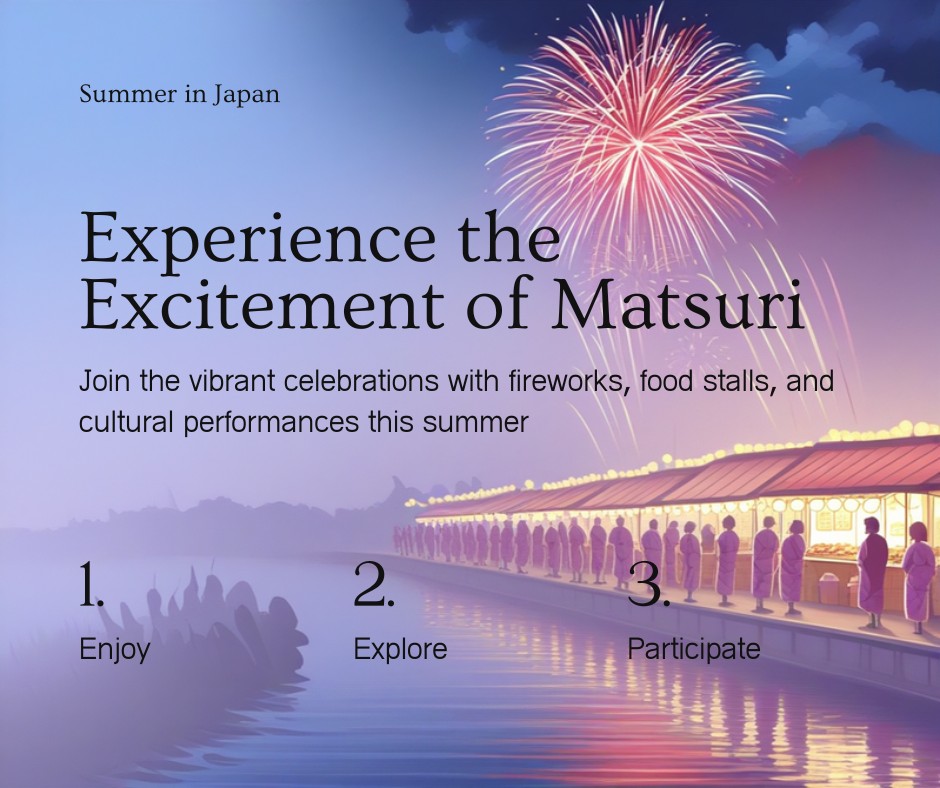
From mid-July through the end of August, Japan fills with the sound of taiko drums, the smell of yakitori smoke, and the sight of rivers lit with a thousand fireworks. Matsuri (祭り) — Japanese festivals — are one of the great cultural experiences of summer in Japan, and they happen everywhere: at local shrines, along riverbanks, in neighborhood parks, and at famous sites drawing hundreds of thousands of visitors.
For tourists, summer festivals offer something money cannot buy — a chance to participate in living Japanese culture alongside locals who are celebrating exactly as their grandparents did. Here is how to find them, join in, and make the most of your first Japanese matsuri.
1. What Is a Matsuri?
The word matsuri means festival, but it also carries the older sense of ritual — a celebration in honor of the gods (kami) or ancestors, rooted in Shinto or Buddhist tradition. Every matsuri has a spiritual origin, even when the modern celebration looks primarily like music, food, and dancing.
Three main types of summer festival you will encounter as a tourist:
Fireworks festivals held along rivers and bays. Japan's hanabi are world-class — thousands of shells over 90-minute shows, often with competing barge teams and choreographed music. These are the most spectacular summer events and draw huge crowds.
Communal dancing performed during the Obon period (August 13–16). Open circles around a central tower — tourists are welcome to join. Simple, repetitive steps, festive music, and an atmosphere of genuine community joy.
Festivals tied to specific shrine deities, often including portable shrine processions (mikoshi), stalls selling traditional foods, and music and dance performances on shrine stages. These vary enormously by region and deity.
2. Major Summer Festivals in Tokyo 2026
| Festival | Date | Location | Free? |
|---|---|---|---|
| Mitama Matsuri | July 13–16 | Yasukuni Shrine, Chiyoda | Yes |
| Sumida River Fireworks | July 25 (Sat), 7–8:30 p.m. | Asakusa riverside | Yes (public viewing) |
| Tsukiji Hongwanji Bon Odori | July 29–Aug 1 | Tsukiji Hongwanji Temple | Yes |
| Fukagawa Hachiman Matsuri | Aug 12–16 | Tomioka Hachimangu Shrine | Yes |
| Azabu-Juban Noryo Matsuri | Aug 22–23 | Azabu-Juban shopping street | Yes |
| Koenji Awa Odori | Aug 29–30 | Koenji streets | Yes |
3. What to Wear: Yukata
Summer festivals are the primary occasion for wearing a yukata (浴衣) — a lightweight, casual kimono worn during warm months. Wearing one to a festival is warmly encouraged, even for tourists. It is not required or expected, but it significantly enhances the experience and will earn you approving smiles from locals.
- Where to buy: Asakusa, Kyoto's shopping streets, and most department stores sell yukata sets (yukata + obi sash + wooden sandals) for ¥3,000–¥15,000
- Where to rent: Many tourist areas offer yukata rental with dressing assistance for ¥2,000–¥5,000 per day
- How to wear: The left side always goes over the right (right over left is funeral dress — the one error to avoid)
- With or without: Western summer clothes are perfectly acceptable at any festival. Yukata adds to the atmosphere but is a choice, not a rule
4. Festival Food: What to Eat
The food stalls (yatai, 屋台) at Japanese festivals are a world of their own. Bring cash (¥2,500–3,500 per person covers a full evening of grazing) and expect to eat standing or sitting on plastic crates.
Skewered grilled chicken with salt or tare glaze. The smell alone navigates you to the right stall. ¥150–250 per skewer.
Octopus balls cooked in a cast iron mold and topped with bonito flakes, mayo, and savory sauce. ¥500–700 for 6–8 pieces.
Shaved ice with flavored syrup — a summer festival staple since the Heian period. Strawberry, melon, lemon, blue Hawaii. ¥300–500.
Cold beer (Asahi, Kirin, Sapporo) is sold at most evening festivals. Ramune — carbonated lemonade in a glass bottle sealed with a marble — is the classic non-alcoholic festival drink.
5. How to Find Local Festivals
The most memorable festival experiences are often the small neighborhood ones, not the famous tourist events. A local bon odori in a residential area has a different atmosphere — more intimate, more genuinely communal — than a famous festival drawing tourists from overseas.
- Ask at your hotel: Concierges and staff know the local neighborhood schedule, including events not on English tourism sites
- Look and listen: The sound of taiko drums and festival music carries. If you hear it while walking in a residential neighborhood, follow it
- Ward websites: Each city ward (区, ku) publishes a summer event calendar. Google "[ward name] 夏祭り 2026" to find local listings
- Look for lanterns and yagura towers: The wooden tower at the center of a bon odori circle is visible from a distance and signals an upcoming or ongoing dance event
The Sumida River Fireworks and other famous events attract close to 1 million people. Train stations near the venue close to new arrivals in the hours before the event. Arrive 90+ minutes early, choose a viewing spot away from the official premium zones, and plan your exit route before the fireworks end — the post-show rush is intense.
6. Festival Etiquette for Tourists
- Carry cash: All festival food stalls and small merchandise sellers are cash-only
- Do not block the path: When watching a procession or mikoshi, keep clear of the main parade route unless invited to join
- Clap, do not whistle: Applause is fine at performances. Whistling is unusual in Japan and can seem rude
- Rubbish bins are rare: Many festivals have few or no public bins. Carry a small bag for your rubbish and dispose of it when you find a bin or at your convenience store
- Join the bon odori circle: You are welcome to step in and follow along. Nobody expects perfection. Smiling and trying is enough
- Photography is fine in most cases: But ask before photographing people in close-up at shrines or religious ceremonies
Frequently Asked Questions
Q: Do I need a ticket for summer festivals in Japan?
Most outdoor summer festivals — fireworks, bon odori, shrine festivals — are completely free to attend. Premium viewing areas for major fireworks may require purchased tickets or reservations at waterfront restaurants. General public viewing areas are always free.
Q: What is the best summer festival in Japan?
For fireworks: Sumida River (Tokyo, late July) and Tenjin Matsuri (Osaka, July 24–25) are iconic. For traditional dance: Awa Odori in Tokushima (August 12–15) is the largest and most famous bon odori festival in Japan, drawing 1.3 million visitors. For atmosphere: any local neighborhood bon odori gives the most authentic experience.
Q: When is the best time to visit Japan for festivals?
Late July through mid-August is the peak festival window, combining fireworks (June–August), Obon bon odori (around August 13–16), and major city festivals. If you can only visit during one window, late July captures the most variety.
Q: Is it okay for foreigners to join bon odori dances?
Yes, absolutely. Bon odori circles are deliberately open — no skill, registration, or invitation required. Joining as a foreign tourist is seen as enthusiastic cultural participation, not intrusion. The steps are simple and designed to be learned on the spot.
Conclusion
Japan's summer festivals are one of the country's finest gifts to summer visitors. Whether you catch a world-class fireworks show, step into a bon odori circle in a neighborhood you discovered by following the sound of taiko drums, or stand at a yatai stall eating kakigori at midnight — these moments are the ones Japan visitors remember for years. Plan for the big events, but leave room for the unexpected small ones.
Related: Obon in Japan 2026 Guide · Japan Summer Survival Guide · Cash in Japan: Tourist Guide
Sources: Metropolis Japan — Tokyo Summer Festivals 2026 · Self Guide Japan — Summer Festival Guide