
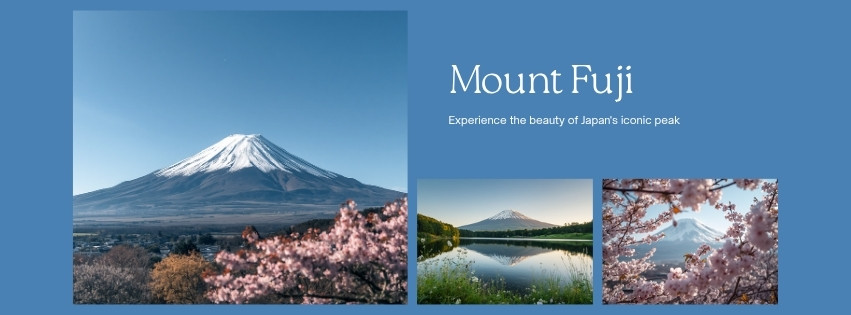
At 3,776 meters, Mount Fuji (富士山) is Japan's highest peak and the country's most recognizable natural icon. It appears on everything from sake labels to woodblock prints — yet the experience of actually standing at its base or reaching its crater rim is incomparably more powerful than any image can convey. On a clear day from the Fifth Station, the horizon curves slightly with the earth's surface. At the summit at dawn, you watch the sun rise over a sea of clouds. This is one of the great experiences available to any visitor to Japan, and with proper planning it is entirely achievable as a day trip from Tokyo.
This guide covers transport options, the climbing season and trails, what to realistically expect, and how to visit even if climbing is not your goal.
1. Getting to Mount Fuji from Tokyo
Mount Fuji is located approximately 100 kilometers southwest of Tokyo, in the border region between Yamanashi and Shizuoka prefectures. The most practical access point for visitors is Fuji-Subaru Line Fifth Station (富士スバルライン五合目) on the Yoshida Trail — the most popular starting point for climbers and the best non-climbing viewpoint.
The easiest option for most visitors. Direct highway buses run from Shinjuku Bus Terminal (Busta Shinjuku) to the Fifth Station in approximately 2 hours 15 minutes. Operated by Fujikyu Highway Bus and Keio Bus. One-way fare is approximately ¥2,700–¥3,000. During climbing season (July–September), buses run frequently with advance reservation strongly recommended via the official website or convenience store terminals.
Take the JR Chuo Line from Shinjuku to Otsuki Station (about 1 hour), then transfer to the Fujikyu Railway to Kawaguchiko Station (50 minutes), then a Fujikyu bus to the Fifth Station (about 1 hour). Total journey: approximately 2.5–3 hours each way. This option is partially covered by the JR Pass for the Chuo Line portion, making it cost-effective for pass holders. Note the Fujikyu Railway section is not covered by the JR Pass.
2. The Climbing Season
Mount Fuji's official climbing season runs from early July to early September — typically July 1 to September 10 for the Yoshida Trail. Outside this window, the mountain facilities (huts, toilets, first aid stations) are closed, and conditions can be genuinely dangerous even for experienced mountaineers.
Fuji has claimed lives among unprepared visitors who attempted climbs in spring, autumn, or winter. Snow, ice, high winds, and sudden weather changes make the mountain extremely hazardous outside July–September. Even within season, afternoon thunderstorms are common and weather can change from clear to life-threatening within an hour. Check the official Fujisan Climbing website for current conditions, and always have a contingency plan to descend immediately if conditions deteriorate.
3. The Four Climbing Trails
Mount Fuji has four main trails, each starting from a different Fifth Station on different sides of the mountain. All four lead to the summit crater, but they differ significantly in difficulty, accessibility, and crowd levels.
| Trail | Fifth Station Altitude | Climb Time | Difficulty | Notes |
|---|---|---|---|---|
| Yoshida (吉田) | 2,305m | 5–7 hrs up / 3–5 hrs down | Moderate | Most popular. Most facilities, mountain huts, and toilets. Easiest transport access from Tokyo. |
| Subashiri (須走) | 1,970m | 5–8 hrs up / 3–5 hrs down | Moderate-Hard | Quieter. Forested lower section is beautiful. Lower starting altitude means longer climb. |
| Gotemba (御殿場) | 1,440m | 7–10 hrs up / 3–5 hrs down | Hard | Longest and most demanding. Very few facilities. Only for experienced, fit hikers. Sunrise views are superb. |
| Fujinomiya (富士宮) | 2,400m | 4–6 hrs up / 2–4 hrs down | Moderate | Highest starting point. Shortest route to summit. Access from Shizuoka side. |
For first-time visitors doing a day trip from Tokyo, the Yoshida Trail is the overwhelmingly practical choice due to direct bus access from Shinjuku and the most comprehensive facilities on the mountain.
4. What to Bring: Essential Gear
Mount Fuji looks like a gentle cone from a distance. In practice, the summit is cold enough for frost even in August, the trails are rocky volcanic scree above the Eighth Station, and altitude sickness is a genuine risk. Preparation is not optional — it is the difference between a memorable experience and a medical emergency.
At the Fifth Station (2,300m), temperatures may be 10–15°C cooler than Tokyo. At the summit, expect near-freezing temperatures even in summer. Bring layers: a moisture-wicking base layer, an insulating mid-layer, and a waterproof/windproof shell jacket and trousers. Gloves and a warm hat are essential for the summit even in July. Do not underestimate this — people in t-shirts and flip-flops are rescued from Fuji every season.
Trekking poles significantly reduce knee strain on the long volcanic scree descent. Headlamp with spare batteries (essential if you start before dawn for sunrise). Plenty of water — at least 2 liters, more in summer heat. High-energy snacks. Mountain hut food and drinks are available but expensive (a can of water at the summit costs around ¥500). Altitude sickness medication (diamox) requires a prescription but is worth considering for susceptible individuals.
5. Not Climbing? Best Viewpoints Around Fuji
A clear view of Mount Fuji from the ground — the classic symmetrical cone reflected in a still lake — is arguably more visually spectacular than standing on its summit. The Fuji Five Lakes (富士五湖 / Fujigoko) region on the northern base of the mountain offers some of the most iconic views in Japan.
The most accessible of the five lakes from Tokyo, with regular bus service from Shinjuku (about 1 hour 50 minutes). The northern shore offers the famous Fuji reflection in calm morning conditions. The Chureito Pagoda — a five-story pagoda with Fuji framed perfectly behind it — is a 20-minute walk from Fujiyoshida Station and produces one of the most photographed images in Japan. Best photographed at dawn in spring (with cherry blossoms) or autumn (with red maple leaves).
The clearest and deepest of the five lakes, and the location of the most iconic Fuji view — the one depicted on the old ¥1,000 bill. The lake is located furthest west and requires a bus or car from Kawaguchiko. Photography from the northern shore at dawn in calm weather produces extraordinary reflections. Less crowded than Kawaguchiko because of the additional travel required.
6. Practical Tips and Crowd Management
Mount Fuji is one of the world's most climbed mountains — over 200,000 people ascend it annually during the July–September season. Crowd management is now an active concern of both governments and visitors.
Conclusion
Mount Fuji rewards preparation and punishes complacency. With proper gear, a realistic understanding of the time and physical demands involved, and a plan for both good and bad weather, a Fuji experience — whether from the lakeshore or the summit crater rim — is genuinely life-enriching. It is not a tourist box to tick casually; it is a mountain that demands respect and returns awe in equal measure. Plan carefully, start early, and let the scale of the thing surprise you.
Frequently Asked Questions
Can I climb Mount Fuji in one day?
Yes, a one-day round trip from the Fifth Station is possible on the Yoshida Trail — approximately 5–7 hours ascent and 3–5 hours descent. Starting at the Fifth Station by 5–6 AM and descending by late afternoon is a reasonable plan for a fit, well-prepared hiker. However, rushing the ascent significantly increases altitude sickness risk. Take the ascent slowly — the recommendation is to stop and rest for 5–10 minutes every 30–40 minutes of climbing.
Is Mount Fuji open year-round?
The official climbing season is July 1 to approximately September 10 (exact dates vary by trail and year). Outside this window, mountain huts and emergency facilities are closed. The mountain itself is not "closed" — some experienced mountaineers climb in winter — but it is extremely dangerous without proper alpine equipment and experience. Casual visitors should only attempt the climb during the official season.
How fit do you need to be to climb Mount Fuji?
A reasonable baseline fitness level is sufficient for most people on the Yoshida Trail. The key factors are not speed or athletic ability but rather proper preparation (layered clothing, sufficient water), willingness to ascend slowly, and altitude awareness. People in their 60s and 70s climb Fuji regularly. The most common reasons for turning back are altitude sickness (which affects people regardless of fitness) and inadequate clothing for summit temperatures. If you can walk briskly for several hours, you can likely climb Fuji.
What is the best time of day to arrive at the Fifth Station?
For a day hike without staying overnight: arrive at the Fifth Station between 5 and 7 AM to give yourself enough time to summit and descend before afternoon thunderstorms (which typically build between noon and 3 PM in July and August). For non-climbers visiting the Fifth Station for views and shopping: morning arrival is best for clear weather before clouds build around the peak.
Do I need a guide to climb Mount Fuji?
A guide is not required on the Yoshida Trail during the official season. The path is clearly marked, staffed with mountain huts, and has signage in English. However, if you are planning an off-season climb, or climbing one of the less-traveled trails, engaging a licensed mountain guide is strongly recommended for safety reasons.