
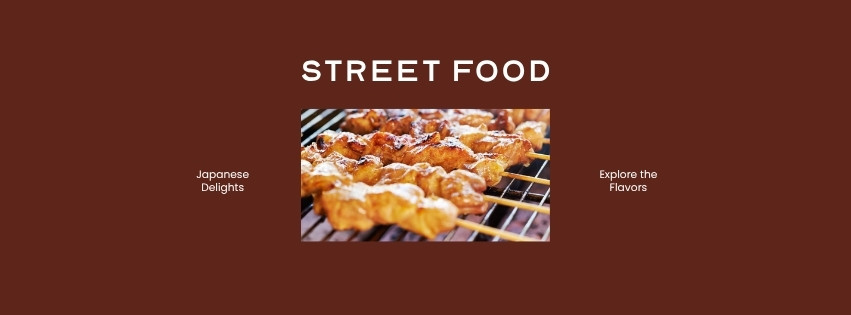
The smell hits you first. Somewhere between the sweet soy glaze caramelizing on a yakitori skewer and the savory bonito flakes dancing on a fresh batch of takoyaki, Japanese street food announces itself before you can even see the stall. Yatai (屋台) — Japan's portable food stalls — are one of the most beloved parts of daily life and festival culture here, and navigating them well is one of the great pleasures of traveling through the country.
Whether you are at a summer festival, strolling through a covered shopping arcade, or visiting a dedicated street food market, the options are extraordinary. This guide covers the essential dishes, where to find them, how much to pay, and the unwritten rules that will make you a confident yatai customer from day one.
1. What Are Yatai?
A Yatai (屋台) is a portable, wheeled food stall that can appear almost anywhere — a festival ground, a street corner, a riverside esplanade, or a dedicated outdoor market. The word literally means "shop stand," and yatai have been a central part of Japanese urban food culture for over 400 years.
Unlike Western street food vendors, Japanese yatai are typically highly specialized. A single stall almost always sells one type of food, prepared fresh in front of you with practiced precision. The cook behind the counter has often been making the same dish for decades, and that focus produces a level of quality that is genuinely hard to match in a sit-down restaurant.
2. Takoyaki: Japan's Most Famous Street Food
Takoyaki (たこ焼き) originated in Osaka in the 1930s and has since conquered the entire country. These golf-ball-sized spheres of batter contain a piece of Tako (タコ) — octopus — along with diced pickled ginger, green onion, and tenkasu (tempura scraps). They are cooked in a special cast-iron grid with hemispherical molds, rotated with picks to form a perfect ball shape, and served six or eight to a tray.
The standard topping combination is: Takoyaki sauce (similar to Worcestershire sauce but sweeter and thicker), Japanese mayonnaise (applied in a zigzag pattern), Aonori (青のり) dried green seaweed flakes, and Katsuobushi (鰹節) bonito flakes that wave dramatically in the heat. Some stalls offer salt-based (shio) variants or cheese toppings. Ponzu takoyaki with grated daikon is a lighter alternative gaining popularity.
Takoyaki is extraordinarily hot inside. The batter insulates the molten filling remarkably well. Even when the outside has cooled enough to handle, the center can be close to boiling. The correct technique is to bite a small piece off the edge first, wait a moment, then eat. Many first-time visitors burn the roof of their mouth badly because they underestimate how long the interior stays hot.
Takoyaki costs approximately ¥400–¥700 for 6–8 pieces at a festival stall. In Osaka's Dotonbori district, you can find legendary spots like Aizuya and Kukuru where the craft has been elevated to an art form.
3. Yakitori: Grilled Skewers Done Right
Yakitori (焼き鳥) literally means "grilled bird," and while chicken is the primary protein, the term is used loosely to describe any grilled skewer at a street stall. The preparation is elegantly simple: small pieces of chicken (or vegetables, or pork) threaded onto bamboo skewers and grilled over Bincho-tan (備長炭) — a premium white charcoal that burns extremely hot and imparts a distinctive clean flavor.
Momo (もも) — Thigh meat. Rich, juicy, and forgiving. The best starting point.
Negima (ねぎま) — Chicken and green onion, alternating on the skewer. The classic combination.
Tsukune (つくね) — Chicken meatball. Often dipped in a raw egg yolk. Surprisingly delicate.
Kawa (かわ) — Chicken skin, grilled until crispy. Beloved by locals, offputting to some newcomers.
Tan (タン) — Beef tongue. Sliced thin, salted, grilled briefly. Rich and tender.
Every yakitori stall offers two seasoning options: Tare (たれ) is a sweet soy-based basting glaze applied during grilling — rich, caramelized, and savory. Shio (塩) is simply salt. Experienced yakitori eaters often prefer shio for quality cuts like momo or liver, where the flavors are subtle enough to shine without sauce. Ask "tare de" or "shio de" when ordering. Skewers typically cost ¥100–¥300 each.
4. Other Essential Street Food Dishes
Beyond takoyaki and yakitori, Japan's street food scene encompasses dozens of beloved dishes. Here is what to look for at any well-stocked yatai market or summer festival.
| Dish | Japanese | Description | Typical Price |
|---|---|---|---|
| Taiyaki | 鯛焼き | Fish-shaped waffle filled with sweet red bean paste (anko), custard, or chocolate. Crispy outside, soft inside. | ¥200–¥400 |
| Okonomiyaki | お好み焼き | Savory cabbage and batter pancake with your choice of toppings. Cooked on a griddle in front of you. | ¥700–¥1,200 |
| Kakigori | かき氷 | Finely shaved ice with flavored syrup. Essential in summer heat. Matcha, strawberry, and melon are classic flavors. | ¥300–¥600 |
| Corn on the Cob | 焼きとうもろこし | Grilled corn brushed with soy butter. Deceptively simple and delicious. | ¥400–¥600 |
| Choco Banana | チョコバナナ | Banana on a stick dipped in chocolate and decorated with sprinkles. A matsuri classic. | ¥200–¥400 |
| Crepe | クレープ | Thin crepe wrapped into a cone with sweet fillings. Strawberry, banana, custard, or matcha cream. | ¥400–¥700 |
| Ikayaki | いか焼き | Whole squid grilled on a flat iron, basted with soy sauce. Particularly popular in Osaka. | ¥500–¥800 |
5. Where to Find Street Food in Japan
Japanese street food is not uniformly distributed — knowing where to look is half the battle. Here are the primary settings where you will find the best yatai culture.
The densest concentration of yatai happens during summer festivals (June–September). Major festivals like Gion Matsuri in Kyoto or the Sumida River Hanabi in Tokyo will have hundreds of stalls. Arrive at dusk when the atmosphere is best and the food is freshest. Be prepared for crowds — the queues at popular stalls can be 15–20 minutes long.
Many Shinto shrines and Buddhist temples hold regular Ennichi (縁日) market days with dozens of food stalls. Asakusa's Senso-ji in Tokyo, Fushimi Inari in Kyoto, and Sumiyoshi Taisha in Osaka all have regular market days. Check the shrine or temple calendar for dates. These are quieter and more local than major festivals.
Covered shopping arcades (Shotengai / 商店街) in cities like Osaka's Kuromon Market or Tokyo's Ameyoko often have permanent street food stalls operating daily. Nishiki Market in Kyoto — nicknamed "Kyoto's Kitchen" — offers year-round street food including skewered tofu, pickles, and grilled fish with no festival required.
6. Etiquette at Yatai Stalls
Japanese street food culture has its own set of unwritten rules. Following them makes you a better customer and a more welcome visitor.
The vast majority of yatai stalls operate on cash only. Card readers and QR payment apps are becoming more common in permanent market locations, but at festival stalls you should absolutely assume cash is required. Bring small bills and coins — stalls often cannot break large notes (¥10,000 bills) during busy festival periods. Stock up at a convenience store ATM before heading to a festival.
7. Budget Planning for Street Food
Street food in Japan is affordable relative to restaurants, but the cumulative cost of grazing through a festival can add up faster than expected. Here is how to budget intelligently.
Conclusion
Japanese street food is one of the most democratic pleasures the country offers. You do not need restaurant reservations, language skills, or insider knowledge to eat spectacularly well at a yatai stall — you simply need to follow your nose and be willing to eat standing in a crowd. Start with takoyaki and yakitori, work your way toward the more unfamiliar items as your confidence grows, and always bring more cash than you think you need. The best meal of your Japan trip might very well come from a cart on a festival street.
Frequently Asked Questions
Are there vegetarian options at Japanese street food stalls?
Vegetarian options exist but require some searching. Taiyaki (sweet bean paste), kakigori (shaved ice), yakisoba (noodles — though often contain small bits of pork), corn on the cob, and crepes can all be vegetarian depending on preparation. Takoyaki contains octopus by definition. At festival stalls, language communication can be difficult, so pointing at ingredients and asking "niku nai?" (no meat?) is your best approach. Dedicated vegetarian and vegan food markets are growing in major cities.
What are the best cities for street food in Japan?
Osaka is widely considered Japan's street food capital — the locals have a saying "kuidaore" (eat until you drop) that reflects the city's culinary obsession. Dotonbori and Kuromon Market are the epicenters. Fukuoka's yatai district along the Naka River is uniquely atmospheric. Tokyo's Asakusa and Ameyoko market in Ueno both offer strong year-round street food. Kyoto's Nishiki Market is excellent for more refined prepared foods.
When are the best times to visit festival stalls?
Yatai stalls at festivals typically open in the late afternoon (around 4–5 PM) and run until around 9–10 PM. The golden hour is between 6 and 8 PM, when the atmosphere is at its peak — evening light, full crowds, the smell of grilling food, and the sound of festival music. Arriving earlier means shorter queues and fresher stock; arriving later means a livelier atmosphere.
How do I order without speaking Japanese?
Most yatai vendors are accustomed to non-Japanese customers, particularly at major tourist festivals. Pointing at the display food or the menu board works effectively. Hold up fingers to indicate quantity. Hand over a ¥500 or ¥1,000 coin/bill and wait for change. A smile and "Arigatou gozaimasu" (thank you) goes a long way. Many stalls now have picture menus or English descriptions, particularly in tourist-heavy areas.
Is street food in Japan safe to eat?
Japan has exceptionally high food safety standards, and yatai stall operators are licensed and regulated by local health authorities. Food safety incidents at yatai are extremely rare. Items like raw egg dipping sauce for tsukune (chicken meatball skewers) are common and generally safe given Japan's stringent egg production standards. If you have severe allergies, carry an allergy card in Japanese listing your restrictions.